The Ultimate Essay Writing Toolkit.
Your go-to guide to essay writing when you need it for homeschool parents and teachers.
Lucia Mungoshi
5/29/202612 min read

Writing is a skill that inevitably knocks on your door from the moment you begin to walk. For children in their upper elementary years( grades 3-6), honing their writing is a constant. Simultaneously, learners explore a myriad of themes, and they move beyond writing fantasy and fiction. It is the moment they begin to express their own ideas, organize these ideas, support their beliefs, and communicate with clarity and reason.
Essentially, this is the time when young learners begin to ponder more deeply, using logic, reason, and experiences to show their understanding of a variety of topics. With this, they become confident learners who can engage with the world around them. When your students learn how to craft a thought-provoking paragraph, their newfound abilities transcend writing and transfer to differing subjects—and beyond classrooms into unexplored spaces.
Unlike previous thought, parents' involvement and reinforcement are of paramount importance.
This guide will enlighten you on each stage of the essay writing process, so you can be on board with your child—you don’t need to be an expert in this arena!
Understanding the Assignment.
Before words begin spilling onto your learner’s page, be sure that your learner completely understands what is being asked of them. It is so easy to gloss over a question, and before you can say catdoodle do, a beautifully written essay has answered the wrong question!
Encouraging your learner to slow down and understand the signal words can help allay any misunderstanding further down the road. We have all been there( with my students), when we have rushed through an assignment only to realise that we have missed the main point entirely, or worse, misread the entire essay.
Tip: If your learner can answer what is required of them in one go, they are likely ready to begin planning out their ideas. Highlighting key words in the writing prompt will help keep their mind on the given topic.
The Power of Planning
I have often found my learners dying to dive straight into writing — and while enthusiasm is wonderful, skipping the planning stage often leads to disorganized, hard-to-follow essays. A few minutes of planning can save a great deal of time (and frustration) later.
Plenty of my students want to dive directly into their writing without even a roadmap. I live through this in all of my writing classes. All that excitement helps propel them forward; nevertheless, putting the planning aside leads to disorganized, incoherent essays. When your learner sets aside a little planning time, frustrations and meltdowns can be reduced to a minimum. I live and die by planning–and not just for writing.
The first is what I like to call brain spitting, or what is commonly known as brainstorming. This is an unstressful way to offload your learner’s ideas with little pressure. Think of this as a time to allow ideas to be laid down before you begin the filtering process. There are different ways of doing this:
Idea lists: This is where you quite literally list all of your ideas, then afterwards you underline the best of the best. This is a more linear process, but it's still worth a try.
Mind Maps: On a piece of paper, draw a cloud or circle in the middle of the paper with branches to link ideas. As a visual thinker, I love mind maps, but this is also how our brain works, in a very non-linear manner.
Rough Outlines: These are great as they map out the various parts of an essay, from the main idea to sub-ideas and conclusions. You may add examples at this part, but it isn’t necessary.
Also, helping out your learner decide which topics are the strongest and then beginning a rough plan can be helpful.
Tip: It is easy to go down a rabbit hole with planning, especially if your learner has plenty of ideas floating around, so timers come in very handy.
Writing a Strong Introduction
An essay’s introduction is where your child can impact the reader–and this makes the reader intrigued enough to keep reading. A great introduction comes with a hook: an opening sentence that can grab attention, some background context, followed by a brief, clear thesis statement.
What is a hook?
A hook is somewhat like bait, the first encounter the reader has with the essay. It is meant to create a sense of urgency, make connections, and prepare the ground for what's to come.
Here are my top hooks for upper elementary students:
A remarkable fact: Beginning with a surprising fact to make the reader ponder( Contrary to belief, chimpanzees, man’s closest relatives, are not monkeys.)Descriptive image: painting a picture with words allows the reader to feel grounded and understand the context of the scene.
A captivating question: Offer a captivating question that makes the reader ponder. Be sure to ask more open-ended questions, something like ( Have you ever thought about how Chimpanzees behave similarly to humans?)
A Short Anecdote: A short, relatable anecdote can ignite interest in the reader.
Once the hook is done, creating a thesis statement should be the next step, and one way is to figure out the main ideas and then concoct your thesis statement. In many ways, beginning with a thesis statement makes the rest of the process much easier.
Tip #1: Ask your reader to create a couple of different statements and then choose from these. It’s great to have a pool to choose from.Crafting a Clear Body paragraph
The body paragraphs are where your child’s ideas are fleshed out into fully developed paragraphs. Sticking to one idea( not two or three ideas) is paramount to avoid confusion for the reader. Having a mix of two ideas makes it difficult to process ideas as well for your learner..
A well-crafted body paragraph follows a simple, dependable structure:Topic Sentence: This is the starter or opening sentence of the paragraph. It sets the stage for what's to come in the paragraph. Again, a powerful topic sentence is clear, concise, and relates to the main idea or argument. Avoid decorative language, as this can leave the reader clueless.
Supporting Details: These are specific examples, facts, and observations that you and your child can research. These details prop up the topic sentence. Without these, the paragraph will be lacking in every sense, so strive for at least two to three per paragraph.
Explanation: To further enhance your essay, your child will need to explain how the example connects back to the main idea. This may or may not come naturally, but it requires some probing–or thinking on thinking. A great way is to ask your learner the importance of the example, or what it shows or represents. This is the difference between a basic essay and a well-thought-out essay.
Closing / Transition: The concluding sentence should summarize the idea and offer a smooth transition into the next idea.
Tip: Pacing these out is important. It may be overwhelming to introduce all parts of a well-constructed paragraph all in one go. Spending time on one part, like supporting details, at first is important before moving into explaining an idea.
How is critical thinking crucial to an essay?
Critical thinking goes beyond essay writing and out into the real world. For my learners, it really has been about experiencing the event, moment, or idea. When it comes to fictional responses, I love getting my learners to step into the moment.
Critical thinking, as a simpler definition, is thinking about a matter, the how and why part of essay writing. There is no one definition; however, critical thinking requires logical reasoning and careful analysis.
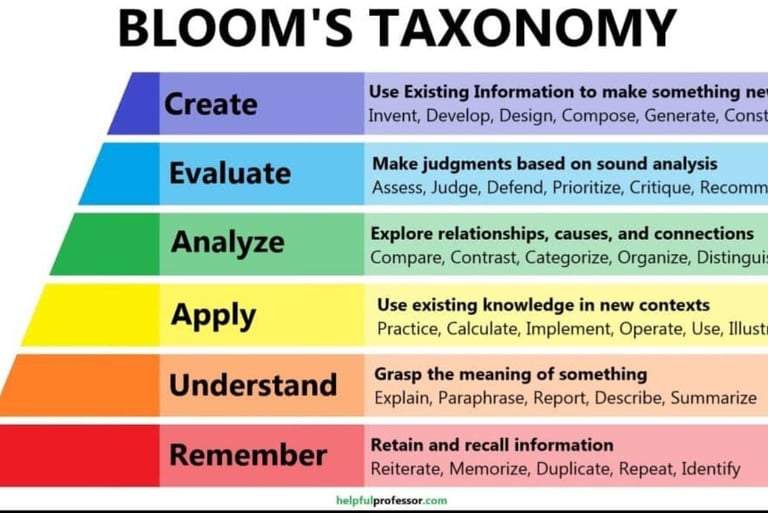
In short, learners go from rote memorization and soaking up information like a sponge to deep thought and processing. Bloom’s taxonomy does a brilliant job in explaining this–at the base, there is reflection and understanding, then testing, and then one can finally create original works.
For essay writing, your child is not merely going to recite evidence, examples, or facts that they already know, but also analyse and reflect on that information carefully. This means their brains are at the center of this activity, and you want to probe your learner more than usual. Frankly, this is not an overnight process and requires a variety of activities to go along with essay writing. For more on critical thinking, check out Clara Muriel’s article
You will not be disappointed as it delves deeper into critical thinking and even has a few activities that learners can use as they become critical thinkers.
Using Graphic Organizers Effectively
Graphic organizers can simplify the process, and straying from the topic is easier than we imagine.
One popular, efficient organizer is the hamburger one. To start with, the top and bottom buns represent the introduction and the conclusion. The juicy parts in between represent the developed ideas in a paragraph, and normally have three parts. You might be surprised when you transfer the hamburger into a doc, and what is left are minor additions.
If a five-paragraph essay is overwhelming to begin with, here is another way to ease your learner into essay organization: The use of short writing responses via structures like RACES or OREO. Here is a blog post on using RACES:
https://sweettoothteaching.com/2021/12/cite-text-evidence.html
And
https://raisethebarreading.com/2018/01/12/opinionwriting/?utm_source=Pinterest&utm_medium=organic
I have even heard of teachers using RACES in much longer essay formats, though it may be somewhat rigid and require some maneuvering.
Tip: Try color-coding the different parts of an essay with your learners, as this has proved to be extremely useful and works really well for visual thinkers.
A Satisfying Conclusion.
This is the final part of an essay that a reader will encounter; it is your learner's last opportunity to make an impression. Now this part is easy to skip over, or pay little attention to, but it is wholly essential in leaving a final stamp. This is about wrapping up the essay satisfactorily and completely.
What is pivotal at this point is restating the main ideas without repeating them word-for-word from the body paragraphs. Probe your learner by posing this question: What do you want your friend to know about the topic if they hadn’t read your essay?
The final sentence of the conclusion, also known as the “coup de grace” or the topper, should leave the reader with something to act on or think further on the topic. These vary and include a call to action, a link to the world at large, or further reflection on why the topic matters.
Tip: Conclusions should not add new ideas–it is about connecting back to earlier ideas and their importance.
Improving Organization and Flow
A great topic idea can easily become confusing if it isn’t organized coherently. Logically organizing ideas means that each idea flows into the next idea naturally. In this case, the reader need not wonder why there is an entirely new topic in the paragraph.
Before writing that first draft, your learner might need some prompting: Should ideas build up to the most important argument, or should they be organized in sequence of the related events? Asking whether an argument should be presented last could help your learners think about the structure. Similarly, there is no standard rule for this, but some careful planning is required when ordering ideas.
Transition words
Transition words progress and connect ideas, or moments, to help prove a point and to show how much time has passed. Essentially, they help the writing feel strong rather than disjointed.
Let's break down the various transition words
To list ideas in sequence, we use– Firstly, To begin with, Secondly, Next,
To connect ideas– Additionally, moreover, furthermore, in fact, for example, for instance
To show contrast–Nevertheless, however, although, despite, still
To conclude a sentence–Finally, to conclude, above all, to summarize, in summary
Using task cards can help your learner become adept at joining sentences with hands-on task cards. If you are struggling to get your learner to connect their sentences, try adding transition words; in fact, I have a series of task cards that you and your learners can use to make their sentences much more flowy.
Tip: After writing, make it a habit for your learner to check for flow and add more transition words if their text seems choppy.
Editing and Revising
Real writing begins in the rewrite. This is usually a hard lesson learned, and sometimes it requires your child to be assessed not only by you, but by his peers, as it helps place their writing into other people’s perspectives. After all, writing does exist in a bubble. Also, it helps to remind your learner that the first draft was not “wrong” and that even professional writers can revise many times over.
Your learner should think of a first draft as the unrefined, rough draft that is yet to be tweaked and not “slashed” using a Samurai writing sword. For many of my learners, tweaking can feel denigrating, so there has to be some level of trust– that you won’t annihilate their text! Moreover, this is the moment where you look at the different parts of the essay as they are all distinct.
Before the sword gets unleashed, though, revising will be the first part: Do the ideas seem reasonable or logical? Are the ideas in the correct order? Should you add some more evidence or elaborate further on a topic? Once this has been addressed, then your child can get down to the nitty-gritty parts and chase those choppy sentences down. Here are some Strategies that can be used.
Reading out loud: this is the easiest way to catch odd phrases floating around or clunky, fractured sentences. To improve on fractured sentences right away, I have included some worksheets here that focus on a variety of sentences.
Using a checklist: a simple, easy checklist can highlight important areas from grammar to idea formulation, to the structure of the essay( think of the body of the essay or the main thesis statement).
Get other eyeballs to read as well to offer a fresh perspective.
Taking a break and walking away from the text makes a huge difference as well.
Tip: Celebrations should happen after the revision process- it can be hard to self-critique, so that in itself is a minor victory and not just the result.
Presentation Matters
A well-written essay deserves to be presented in a stellar manner. Though the presentation seems like it’s just inconsequential to the content, it has a real effect on the clarity and the overall image of the text.
Here are the following things to look out for.
Neatness: Is my handwriting readable? If reading the essay requires deciphering the text as well, it may dissuade the reader from continuing.
Spacing: evenly spread lines and paragraphs make the essay easier to consume and visually enticing.
Titles: a title that expresses what the essay is about is necessary and not written as an afterthought. A deliberate, unique title is more intriguing to the eye than just a regurgitation of words.
Paragraph breaks: paragraphs help the reader organize thoughts with clarity. A simple indent at the beginning of each new idea or skipping a line is acceptable.
Presentation elevates the text and is appreciated by the reader. A meticulously crafted essay invokes a sense of pride, and this can be felt by the reader.
How parents can assist.
There is no need to have a degree in English to support your child’s writing journey. In fact, there are plenty of resources that can aid anyone with writing, and the main focus isn’t grammar or vocabulary.
Ask Guiding Questions
Instead of correcting your learner’s writing, the best way is to pose a question that may help them to weigh their own ideas. Questions like “What do you mean by this?” and “ What is the importance of the text?” are much more powerful than simply telling them to change something. This gives learners a sense of responsibility in finding solutions to their own writing.
Setting aside regular writing time
When writing is consistent and intentional, it produces an effect that is resounding and prideful. Setting aside a few minutes frequently to write on a variety of themes, like a strange incident, a reflection on something they watched, or a brief explanation about a creation, builds competence, fluency, and confidence over a period of time. Another writing channel would be journaling, which is a useful way for kids to get started with expressing their ideas as well.
Celebrate Effort and not just Results
A lot of students are unaware that making mistakes is a part of the writing process, and if they are afraid of making mistakes, they are likely to become reluctant writers. It is essential to celebrate efforts, however minuscule or grand they are, as this helps learners have a growth mindset rather than a black-and-white approach to writing. Acknowledging your child’s zeal when they write a vivid sentence, their decision to revise, or the novel idea they have inserted into their writing.
Tip: Changing kids' writing can make them feel belittled, so there needs to be some caution. Often, giving feedback, bringing supplementary activities, and doing peer assessments work nicely.
Conclusion
The famous William Shakespearean quote says: " Some are born great, and some achieve greatness, while some have greatness thrust upon them.
Likewise, some children have a natural knack for writing, while others must work to acquire great writing. Writing is a skill that involves patience, practice, encouragement, and persistence. Remembering that all writers once stood in the place of your learner will help bring about perspective.
This writing toolkit is intended to make the writing process less overwhelming and pleasant for you and your learner(s). Pick one or two areas of focus to begin with, honor those tiny wins, and trust the process.
With perseverance, patience, and your constant presence, your child will fortify their essays and build a stronger voice that they can use in all walks of life.